Breakfast at the hotel.
09:00 Pick up at the lobby of the hotel.
Proceed for Manila City Tour with Bambike Intramuros Experience Tour.
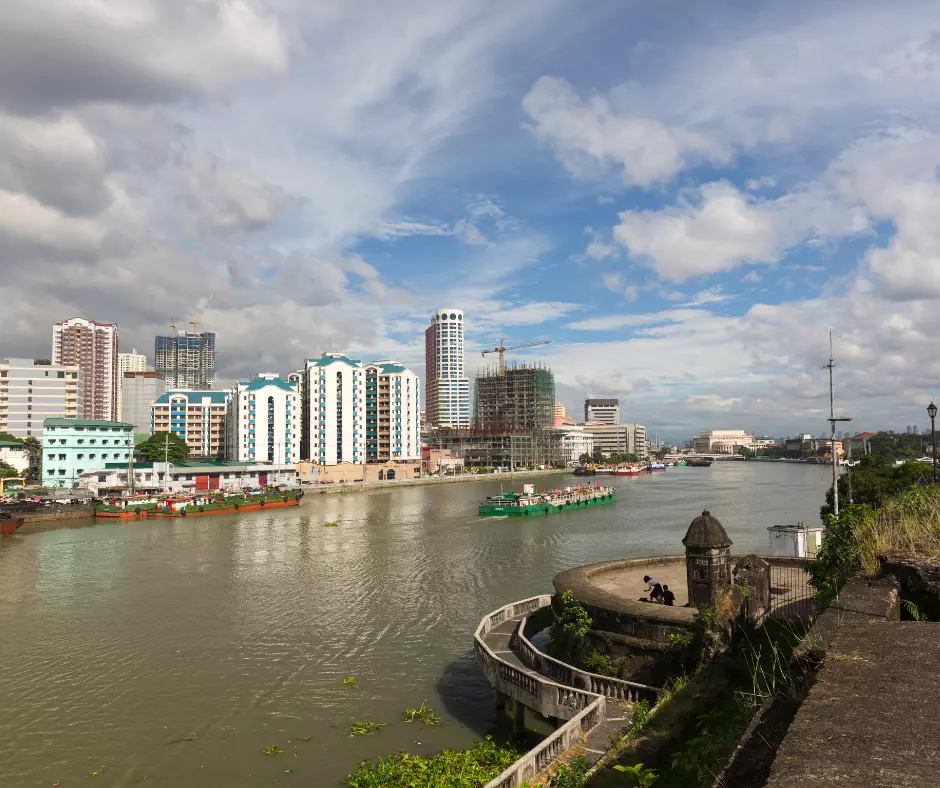
Manila City Tour is one of the most popular city tours. It offers the tourist to learn about the rich culture of the Philippines city capital. A tour guide will bring you the well-selected historical landmarks and interesting parts of the city. Visits include highlights are Rizal Park, the country’s premier park and the site of many important events in the country’s history. Intramuros, the Spanish colonial city and the historic center and oldest district of Manila, also known as the “Walled City”. Tour at the Fort Santiago the Spanish fortress located at the entrance of the Pasig River. It is where the Philippines national hero Dr. Jose Rizal spent his final days and writing his famous “My Last Farewell” before being executed.
Proceed for an Intramuros Experience Bambike Tour (Express Tour 1 Hour)
Ride around historic walled city of Manila on a bamboo bike with Bambike Ecotours! Enjoy history and fun all wrapped with this organic bicycle tour. You will be surely enjoy this bambike tour as this will be more on Historical Values and Activities.
Stop 1: Plaza San Luis
Plaza San Luis is located at the cobblestones street of General Luna in Intramuros across the massive San Agustin Church.
Named after an old town in Manila, the complex is composed of nine houses representing different eras of Filipino – Spanish Architecture. This mix represents the lifestyles of the Illustrados or the priviledged citizens during the late 19th and early 20th century in the Philippines.
Stop 2: Japanese Canon:
Japanese canon is the type 10 or 12 cm/45 10th Year Type naval gun was a Japanese 120 mm calibre dual purpose anti-aircraft and coastal defense gun used during the Second World War. It was derived from the 12 cm/45 3rd Year Type naval gun. The Type 10 number was designated for the year the gun was accepted, the 10th year of Emperor Taishō's reign, 1927 in the Gregorian calendar. It served as the secondary armament on a number of Japanese aircraft carriers and cruisers and as the main armament on smaller ships, in single or twin mountings
Stop 3: Puerta Real Gardens.
Located inside the historically-rich city of Intramuros. The Puerta Real Garden has a lot of tropical greens and coconut palms that surrounded by 18th century stone walls. It was part of the ruins of a venue wherein it was exclusively used for state occasions for the Governor General during Hispanic Era.
Stop 4: Puerta Del Parian.
The fact that the Spanish colonial authorities first built the walls around the Puerta del Parian is an example of the “mixed” attitude they had towards the Chinese in Manila. On one hand, the Chinese merchants have been a driving force in the city’s (as well as in the country’s) economy, especially in the flourishing galleon trade. On the other hand, the Spaniards looked at them with disdain and suspicion that they may soon overthrow the government, especially considering they might gain support from neighboring China. Because of this, the authorities imposed strict measures against the Chinese, forcing them to be confined within the Parian among them while the cannons from the walls around Puerta del Parian are ready to fire the moment any undesirable activity is detected.
And indeed, the Chinese, especially in Parian, revolted against the government on a number of occasions to protest the harsh measures. One such revolt occurred in 1603 which, while crushed, merited the construction of an additional defense system around Puerta del Parian, a triangular fortification or ravelin or reveling in Spanish built in front of Puerta del Parian. This would become known as the Revellin del Parian.
The Puerta del Parian would gain additional significance when in 1765, upon the destruction of the original Puerta Real (royal gate) during the British occupation of Manila, it was elevated to become the new royal gate of the Walled City. This means the gate would be the official entry and exit gate for use of the Spanish Governor General of the Philippines.
Stop 5: Aduana Building:
The Aduana Building, also known as the Intendencia, was a Spanish colonial structure in Manila, Philippines that housed several government offices through the years.
This two-storey governmental structure follows a Neo-Classical tradition, with an emphasized horizontality and symmetrical form, particularly on the design of its façade. The central bay had three arched entrances and two principal staircases built around the two atriums. The rectangular fenestration on the upper most story was decorated with rustication. The window-like portals opening out to small balconies were framed with pilasters topped with ornate capitals and were adorned with elaborate geometrical grillework. Similar ornate grillework also decorated the main entryways in the building.
Stop 6: Manila Cathedral & Plaza De Roma:
Manila Cathedral is the cathedral of Manila and Basilica located in Intramuros, the historic walled city within today’s modern city of Manila Philippines. It is dedicated to the Immaculate Conception, a title for the Blessed Virgin Mary. The cathedral was originally a parish church in Manila under the Archdiocese of Mexico in 1571, until it became a separate diocese. The cathedral was damaged and destroyed several times since the original structure was built in 1581while the eight and current structure of the cathedral was completed in 1958.
Stop 7: San Agustin Church:
It was named a National Historical Landmark by the Philippine government in 1976. San Agustin Church ) is a Roman Catholic church under the auspices of The Order of St. Augustine, located inside the historic walled city of Intramuros in Manila. Completed in 1607, it is the oldest church in the country.
In 1993, San Agustin Church was one of four Philippine churches constructed during the Spanish colonial period to be designated as a World Heritage Site by UNESCO, under the collective title Baroque Churches of the Philippines.
After the activity and the tour, back to hotel.
Overnight Accommodation at BAYLEAF HOTEL using Deluxe Room/Similar Hotel.